West Health Champions: Transforming the Care of Older Adults at Mass General Brigham
In This Article
- With adults aged 65 and older making up an increasing share of the U.S. population, improving the quality of geriatric care is essential
- The West Health Champions program aims to equip Mass General Brigham clinicians with the knowledge and tools to achieve this timely goal
- In its first two years, the initiative has grown into a community of roughly 140 champions across 10 clinical specialties and nine hospitals
Between 2004 and 2024, the share of Americans aged 65 and older rose from 12.4% to 18.0%. Every day, another roughly 10,000 Americans turn 65. These statistics, courtesy of the U.S. Census Bureau, illustrate the extent to which the U.S. population is aging.

Subscribe to the latest updates from Geriatrics & Palliative Care Advances in Motion
Anticipating the evolving care needs of seniors is thus an urgent priority. In response, Brigham and Women’s Hospital partnered with the West Health Institute, an applied medical research organization focused on healthcare and aging, to launch the West Health Accelerator at Mass General Brigham in 2024.
The mission of the West Health Accelerator, a multi-year initiative, is to transform care for older adults regionally and throughout the nation. Its team has developed a groundbreaking geriatric care model that can be easily implemented in a variety of healthcare settings.
One of the West Health Accelerator’s four focus areas is the West Health Champions program. This interdisciplinary education and leadership initiative is equipping clinicians across all professions at Mass General Brigham’s nine hospitals with the knowledge and tools to enhance geriatric care.
Geriatrician Andrea Wershof Schwartz, MD, MPH, AGSF, education strategy lead for West Health Champions, notes that a combination of passionate participants, leadership commitment, and philanthropic support has enabled the program to grow at an unprecedented speed and scale.
“It’s inspiring to see the dedication and expertise that the champions and the site leads at each of the hospitals are bringing to this work,” Dr. Schwartz says. “We’re thrilled about the impact it’s having on the care of older patients hospitalized throughout our system.”
Filling a gap in geriatric training
Dr. Schwartz, who has spent her career advocating for age-appropriate care for seniors, says that West Health Champions is filling a critical gap in healthcare.
“For most health professionals, geriatrics isn’t part of their professional training,” she says. “For example, most medical schools don’t have a rotation in geriatrics like they do in pediatrics or OB-GYN. What we’re left with are health professionals who aren’t well-versed in the ‘4 M’s’ of age-friendly care: mobility, medications, mentation, and what matters.”
Over a one-year period, champions receive training in caring for older adults, quality improvement (QI), and change management. The training takes place via monthly webinars and coaching calls focused on the 4 M’s.
Each champion also takes part in a hands-on QI project that aligns with the goals of the West Health Accelerator and Mass General Brigham’s For Every Patient quality strategy. This exercise brings champions together to identify a pressing problem at their site, assess previous attempts at a solution, develop an improvement strategy, and execute the plan.
“As West Health Champions continues, we hope to be able to scale and spread the successful QI initiatives,” Dr. Schwartz says.
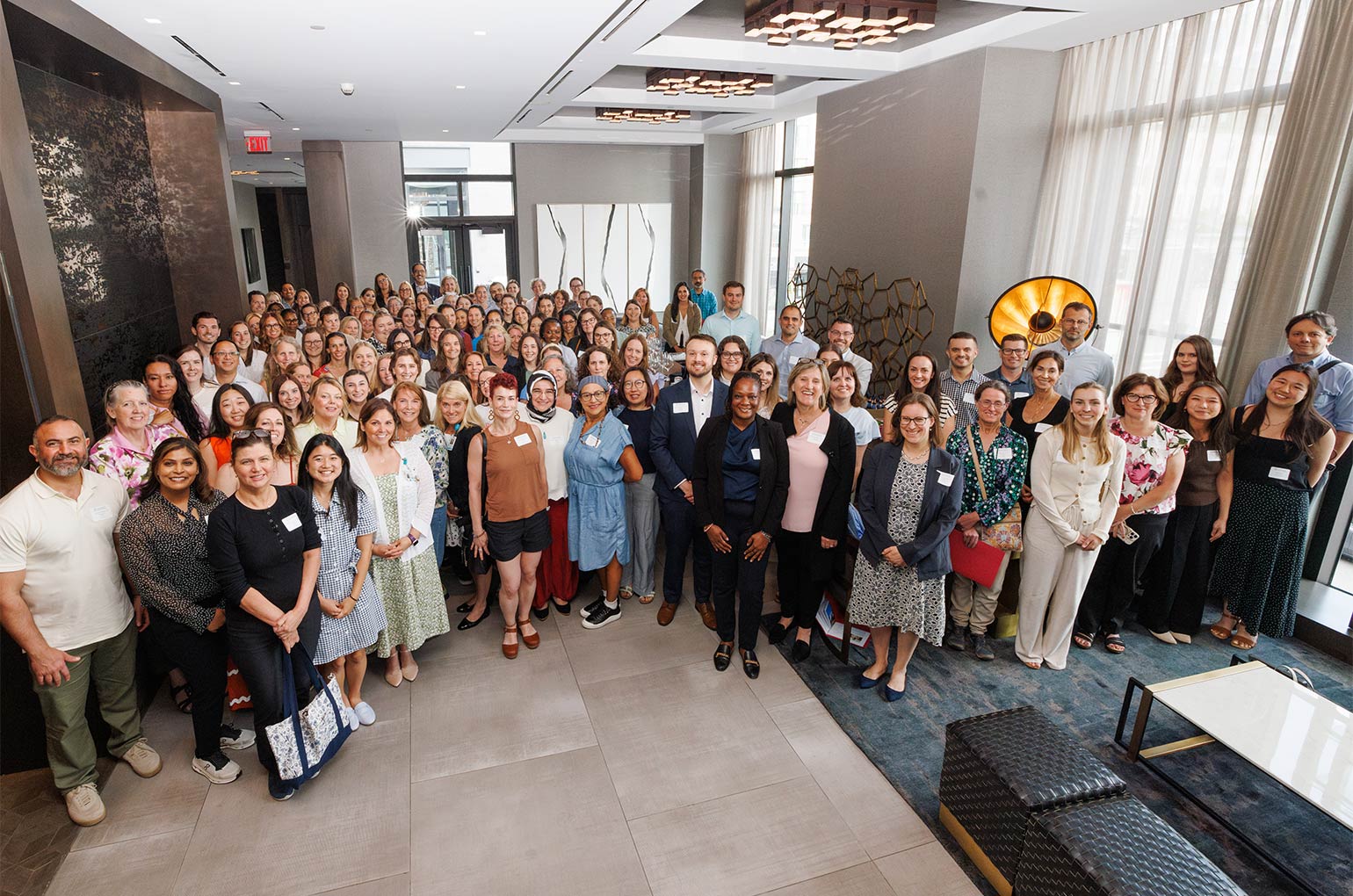
Figure 1
West Health Champions at the graduation event in June 2026.
Adapting best practices locally
The first cohort of West Health Champions included more than 60 clinicians, including advanced practice providers, registered nurses, physical and occupational therapists, physicians, and other health professionals. They represented five Mass General Brigham hospitals: Brigham and Women’s, Brigham and Women’s Faulkner Hospital, Cooley Dickinson Hospital, Newton-Wellesley Hospital, and Salem Hospital.
At their graduation event in June 2026, champions presented the results of the eight QI projects, which covered topics such as:
- Structured interventions for facilitating early and frequent mobilization of older adult patients
- A standardized approach to initiating and documenting “what matters” conversations with patients early in their hospital stay
- Improving timely home medication reconciliation for older adults on the Gynecologic Oncology service
“We have interprofessional teams whose members come from multiple specialties and are applying what they’ve learned in many different settings,” Dr. Schwartz says. “Preventing delirium, for example, might look different on a surgical ward than a medical ward, but the best practices cut across: avoiding high-risk medications, getting patients moving, keeping them engaged, protecting their rest. The champions figure out how to adapt these best practices locally.”
The June 2026 event also served as a kickoff for the second cohort, which includes 78 champions from Massachusetts General Hospital, Martha’s Vineyard Hospital, Nantucket Cottage Hospital, and Wentworth-Douglass Hospital.
West Health Champions is designed for replication and growth across departments, hospitals, and roles. With each new cohort, Dr. Schwartz notes, the program is fostering a network of on-the-ground change agents and working toward lasting transformation of geriatric care at Mass General Brigham.
“Our mission of improving care for older adults, who make up a growing proportion of our hospitalized patients and are at higher risk of adverse outcomes in the hospital, is so critical,” she says. “I’m excited to be part of a movement to ensure every older adult who is hospitalized gets the care that we’d want for our loved ones and ourselves as we age.”